
Senior Mgt & Employee Responsibilities - COVID 19
Direct answer: Effective remote-work cybersecurity during COVID-19 requires clear responsibility split across senior management, employees, and directors, with role-specific checks for communication, endpoint hygiene, access control, and incident response readiness.
The earlier article 'Coronavirus (COVID-19) Guidance for Small and Large Businesses' highlighted emergency planning considerations. As remote work expanded globally, organizations saw higher exposure to malicious emails and related cyber threats.
This post provides a quick role-based checklist so organizations can identify remote-work risk factors and prioritize areas that need immediate management attention.
What are senior management responsibilities for remote-work security?
| # | Questions | Yes | No |
| 1 | Is the CEO present in online tools, channels, and is communicating proactively and engaging in timely conversations? | ||
| 2 | Has the management explained in writing what the company is trying to accomplish and has a vision that can help employees rally behind? | ||
| 3 | Has management addressed the issues raised by employees? | ||
| 4 | Is management courteous, compassionate, and authentic across channels? | ||
| 5 | Does the company have online expressions for your culture? The virtual water cooler where high fives, celebrations, gossip, community, family, personal interest, happy emojis, etc. can be shared. | ||
| 6 | Does the company have the right digital tools to facilitate communication? (E.g., Text messaging, Slack, email, wikis, hangout, video conferences, etc.) | ||
| 7 | Do the company have established security policies and guidelines for remote work? |
What are employee responsibilities for remote-work cybersecurity?
| # | Questions | Yes | No |
| 1 | Is your Wi-Fi connection secure? Can you reach out to the support team to verify and test? | ||
| 2 | Is anti-virus or any updates/patches applied timely to the computer without delay? | ||
| 3 | Do you back-up periodically in addition to auto backup runs? | ||
| 4 | Do you lock your screen while away and protect them from kids? | ||
| 5 | Did you check with your support team that encryption is in place and working? | ||
| 6 | Are you familiar with applicable security guidelines, plans, and policies? | ||
| 7 | Are you aware that the work computer and other devices must not be shared? |
What are director responsibilities for remote-work cybersecurity?
| # | Questions | Yes | No |
| 1 | Do you have adequate support staff to address the questions from remote workers and resolve the issues in time? | ||
| 2 | Do you have the ability to push updates, patches, etc. and enforce timely implementation? | ||
| 3 | Can you provide virtual solutions, digital signature, and approval workflows? | ||
| 4 | Do you have clear procedures for employees to follow in case of a security incident? | ||
| 5 | Can you limit access to sensitive data where it makes sense? | ||
| 6 | Do you have a data breach and incident response plan to manage incidents? | ||
| 7 | Did you send a reminder to employees as to what information needs to be protected? (E.g., confidential, sensitive business information, trade secrets, intellectual property, private employee information, work product, customer information, and other personal information that identifies a person.) | ||
| 8 | Have you trained employees on how to detect and/or handle phishing attacks and other forms of social engineering attacks? | ||
| 9 | Do you have a policy in place to prohibit access to company information systems while on public wi-fi? | ||
| 10 | Do you have solutions in place to manage and secure mobile devices and applications? | ||
| 11 | Are you communicating with employees about coronavirus-themed phishing emails? |
What supporting notes and phishing example are included?
The checklist references guidance from Fast Company, ENISA, JDSPURA, BBC, CNBC, and related sources.
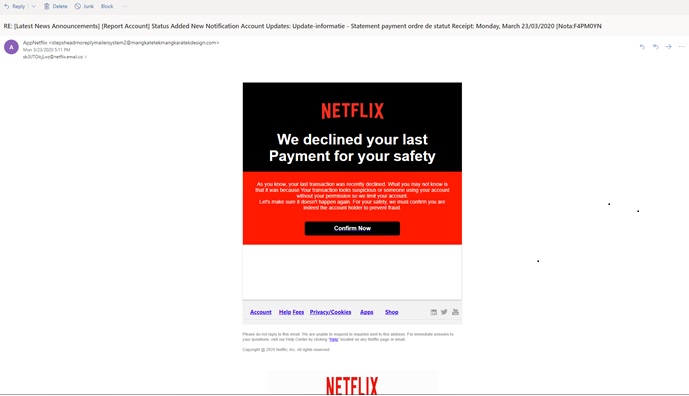
The post also shares a phishing email example received around that period.
Key Takeaways
- Remote-work security effectiveness depends on clearly defined role ownership.
- Leadership must enforce policies and communication cadence while teams maintain endpoint and access hygiene.
- Directors should maintain operational controls for patching, incident response, and phishing-readiness programs.
- A recurring checklist process helps identify gaps early and reduce avoidable cyber incidents.
Related Resources
Related Posts
COVID-19 Easy Fix Remote Work Cyber Security Checklist
A role-based remote-work cybersecurity checklist for senior management, employees, and directors, including phishing-awareness and incident-response readiness prompts.
Read More
COVID-19 Quick Remote Work Cyber Security Checklist
A practical remote-work cybersecurity checklist for senior management, employees, and directors, with role-based controls and phishing-awareness prompts.
Read More
COVID 19, Remote Work, and Cyber Security
A role-based remote work cybersecurity checklist for senior management, employees, and directors, including phishing awareness and incident response readiness.
Read More
GRC Insights That Matter
Exclusive updates on governance, risk, compliance, privacy, and audits — straight from industry experts.