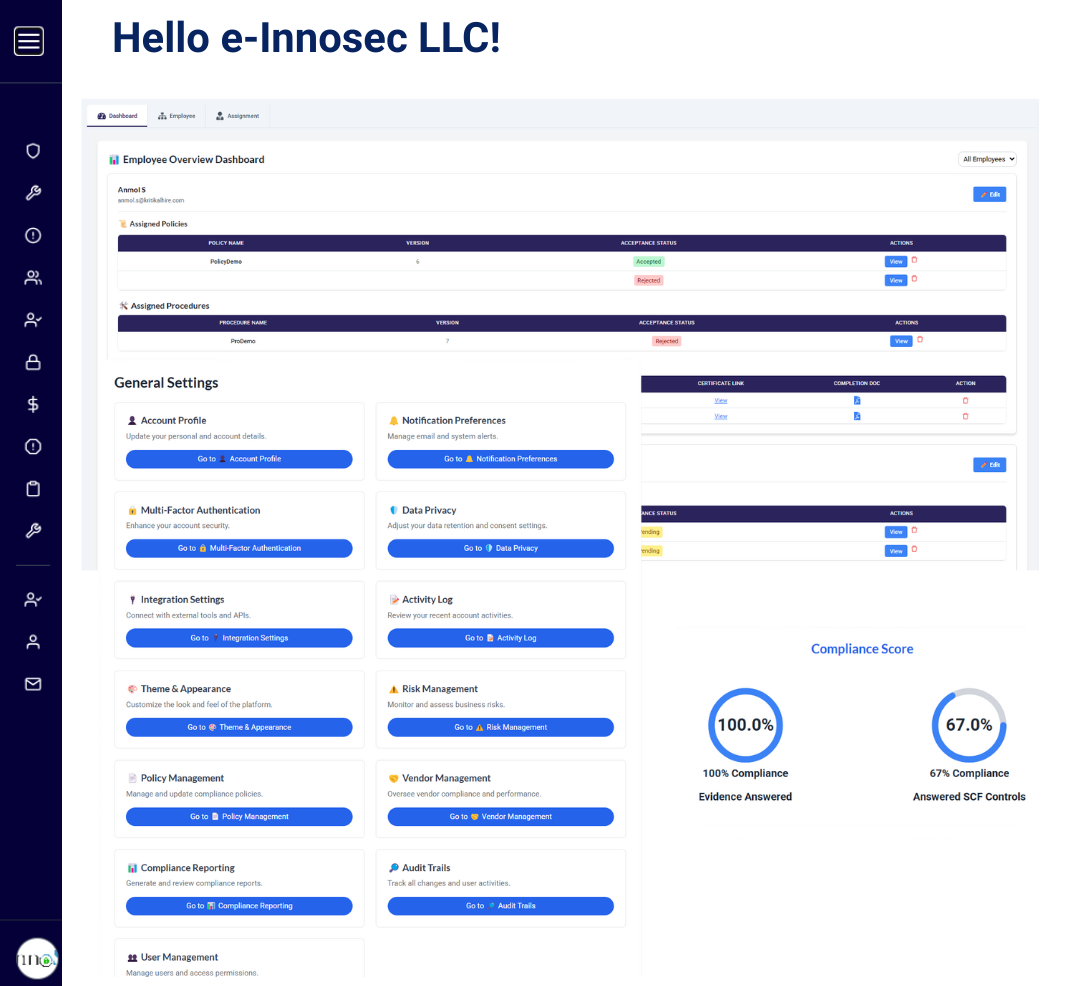

Artificial Intelligence (AI) is transforming Governance, Risk, and Compliance (GRC) by automating risk assessments, offering predictive analytics, and enabling real-time decision-making. For businesses, leveraging AI in GRC can improve efficiency, reduce human error, and help proactively manage risks, ensuring compliance with dynamic regulations.
What is AI-Powered GRC?
AI-Powered GRC is the integration of artificial intelligence with governance, risk management, and compliance systems. This innovation allows businesses to automate the process of monitoring, assessing, and managing risks, streamlining the management of governance frameworks. AI enables predictive risk analysis, improving decision-making by analyzing vast amounts of historical data in real-time.
Read also: DPDP Act Webinar: Business Guide
Why AI is Revolutionizing Risk Management ?
AI is transforming traditional risk management processes by providing tools to anticipate potential risks before they become significant threats. Here’s how AI is driving GRC forward:
Predictive Analytics: AI’s ability to analyze historical data helps identify patterns that predict future risks, enabling businesses to anticipate issues before they occur.
Automated Risk Assessments: AI tools automate risk identification and assessment, reducing the time spent on manual analysis and ensuring continuous, real-time compliance monitoring.
Real-Time Decision Making: By processing data instantly, AI provides real-time insights that allow businesses to react swiftly to potential risks and compliance breaches.
Read Also: Explore the shift in DPDP compliance from planning to execution
The Key Benefits of AI in GRC
AI brings numerous advantages to the GRC landscape:
Improved Efficiency: AI-driven solutions can handle complex tasks like analyzing compliance reports, identifying vulnerabilities, and detecting potential threats, all in a fraction of the time it would take humans.
Reduced Human Error: AI eliminates the risk of human error in compliance tracking and risk management, ensuring more accurate outcomes.
Cost-Effectiveness: By automating labor-intensive processes, AI reduces the need for extensive human resources, cutting operational costs in the long run.
Proactive Risk Management: With predictive risk modeling, AI can forecast risks and suggest mitigation strategies, helping businesses prevent incidents before they happen.
Enhanced Compliance: AI systems continuously monitor regulations, ensuring that businesses are always up-to-date with the latest compliance requirements, reducing the risk of non-compliance penalties.
Read also: Work From Home Security Risks for DPDP Compliance
AI-Powered GRC Tools to Watch Out For
As AI technology continues to evolve, here are some key tools and technologies that are helping businesses integrate AI into their GRC systems:
AI-Driven Risk Assessment Platforms: Tools like IBM’s Watson for GRC and Microsoft Azure’s AI-powered compliance solutions offer businesses the ability to conduct real-time risk assessments and stay compliant with dynamic regulations.
Automated Reporting Tools: AI-based reporting platforms provide automated compliance reporting, significantly reducing the time and cost involved in manual report generation.
Intelligent Decision Support Systems: These tools help businesses make data-driven decisions in real-time, ensuring they stay ahead of potential risks and compliance issues.
Read also: What is PII vs Personal Data?
How AI Improves Cybersecurity in GRC ?
AI plays a pivotal role in enhancing cybersecurity within the broader GRC framework. By integrating machine learning and data protection algorithms, AI-powered GRC systems can detect cyber threats faster, analyze security data, and ensure that businesses’ cybersecurity measures meet compliance standards.
Predicting Cybersecurity Threats: AI can analyze network traffic and historical attack patterns to predict potential breaches, enabling organizations to act before threats escalate.
Automating Compliance for Security Frameworks: With the growing complexity of security frameworks like ISO 27001 and SOC 2, AI can automatically monitor compliance, reducing the risk of gaps in data protection.
Read also: How Data Privacy Breaches Impact Reputation (DPDP)
Why Businesses Need AI-Powered GRC Now ?
As digital transformation accelerates and cyber threats evolve, businesses must rely on AI-powered GRC systems to stay ahead. Here’s why AI in GRC is critical now:
Rapid Regulatory Changes: With regulations like GDPR and DPDP constantly evolving, AI tools help businesses track and adapt to changes in real-time.
Complex Risk Landscapes: The increasing complexity of global markets and interconnected systems requires AI to help businesses identify risks they might otherwise miss.
Competitive Advantage: Early adoption of AI in GRC can give businesses a competitive edge by enhancing their risk management capabilities and improving overall compliance efficiency.
Read also: Personal Data Search for DPDP Compliance in India
Conclusion
AI is no longer just a futuristic concept – it’s a powerful tool that businesses must embrace to streamline governance, risk management, and compliance processes. From predictive analytics to automated assessments and real-time decision-making, AI is reshaping the way businesses approach risk management, ensuring they stay ahead in an increasingly complex regulatory environment.
If you would like guidance on strengthening your DPDP compliance framework or understanding how governance, risk, and compliance tools can support your organization, feel free to contact us for assistance.
You can also visit our website to explore how modern GRC platforms help organizations manage data protection, risk management, and regulatory compliance in a more structured and scalable way.
FAQ
AI-powered GRC refers to the integration of artificial intelligence with governance, risk management, and compliance systems to enhance decision-making, improve risk assessments, and automate compliance processes, ensuring real-time insights and proactive risk management.
GRC Insights That Matter
Exclusive updates on governance, risk, compliance, privacy, and audits — straight from industry experts.
Related Posts