
In today’s complex business environment, organizations are shifting from using siloed tools for governance, risk, and compliance (GRC) management to adopting unified GRC platforms. This transition is driven by the need for better integration, enhanced risk management, and increased efficiency across operations. In this blog, we will explore why this shift is happening and how unified platforms offer significant advantages over traditional siloed systems.
Understanding the Shift from Siloed Tools to Unified GRC Platforms
Definition of Siloed Tools and Unified GRC Platforms
Before delving into the reasons behind the shift, it’s essential to understand the difference between siloed tools and unified GRC platforms.
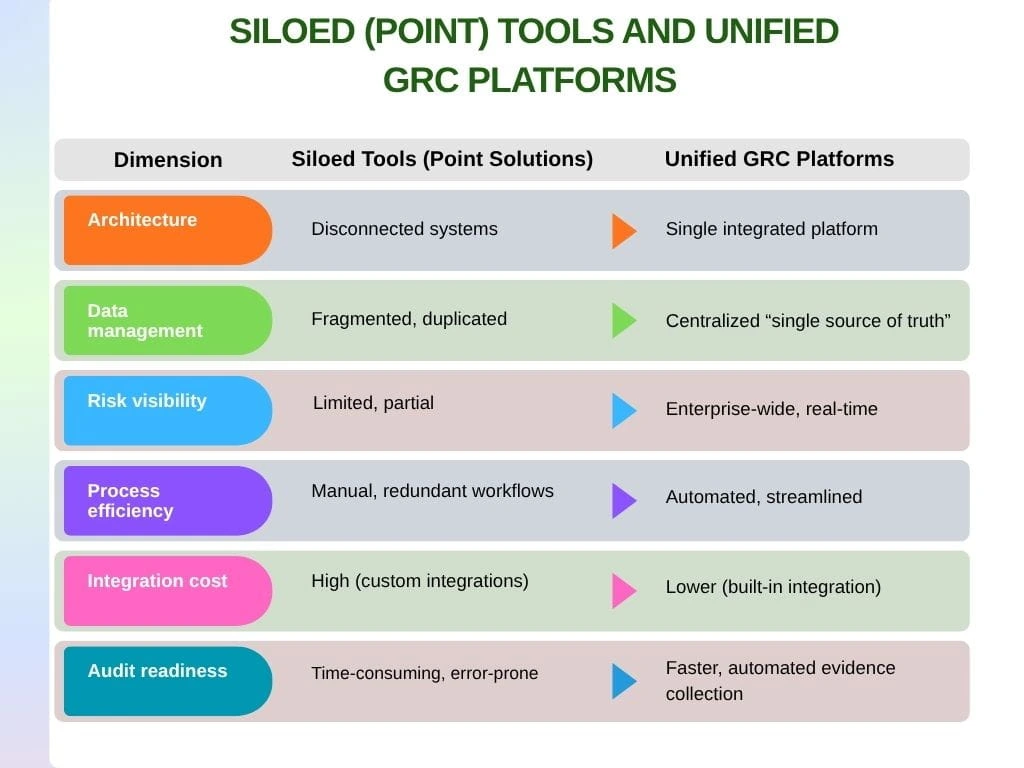
Siloed Tools: These are isolated software solutions that focus on individual aspects of GRC, such as risk management, compliance monitoring, or audit tracking. Each department or function typically uses its own tools, leading to fragmented data and limited communication between teams.
Unified GRC Platforms: These are integrated systems that centralize governance, risk, and compliance activities across the entire organization. These platforms offer a holistic approach, providing a single source of truth for all GRC-related data and enabling seamless collaboration across departments.
Read also: Privacy Risk Management Under DPDP Act
Key Reasons for the Shift to Unified GRC Platforms
As businesses grow and face increasingly complex regulatory landscapes, the need for more cohesive and streamlined GRC solutions becomes critical. Here are the main reasons why organizations are making the switch:
1. Enhanced Data Visibility and Integration
One of the major challenges of using siloed tools is the lack of centralized data. With multiple systems in place, data is scattered across different departments, making it difficult to get a unified view of risks and compliance status.
Key benefits of a unified GRC platform:
- Provides a single source of truth for all GRC data
- Facilitates real-time reporting and decision-making
- Reduces errors associated with manual data entry and integration between systems
Read also: DPDP Compliance Privacy Maturity Report
2. Improved Efficiency and Streamlined Processes
Siloed tools often require redundant efforts, where different teams work on similar tasks in isolation. This can lead to inefficiencies, miscommunication, and delays in compliance reporting.
Key advantages of unified platforms:
- Automates workflows, reducing manual processes
- Centralizes risk assessments and compliance management
- Enables real-time tracking and reporting, improving response times
Read also: Why Data Inventory is Essential for DPDP Compliance
3. Better Risk Management and Compliance Monitoring
With siloed tools, monitoring compliance and assessing risks can be a fragmented process, as data is stored in different systems. A unified GRC platform centralizes all risk and compliance data, making it easier to identify potential issues early on and implement mitigation strategies more effectively.
Key benefits:
- Enables comprehensive risk assessments
- Provides an integrated view of compliance across different regulations
- Helps in proactive risk management with automated alerts
Read also: DPDP Compliance for Businesses in India
4. Cost Savings and Resource Optimization
Organizations using siloed tools often have to invest in multiple software licenses, maintenance, and training for different systems. A unified GRC platform eliminates the need for these redundancies, leading to significant cost savings.
Cost-saving advantages:
- Reduces IT maintenance costs by consolidating tools
- Streamlines training programs, as employees only need to learn one system
- Optimizes resource allocation by automating key tasks
Checklist: Steps for Transitioning to a Unified GRC Platform
Making the switch from siloed tools to a unified GRC platform requires careful planning and execution. Here’s a step-by-step guide to help your organization transition smoothly:
- Assess Current Systems: Identify the tools currently in use and evaluate their effectiveness in meeting GRC objectives.
- Define Requirements: Determine the key features needed in a unified GRC platform, such as risk assessment capabilities, compliance tracking, and reporting.
- Select the Right Platform: Choose a platform that integrates well with your existing systems and meets your organization’s needs.
- Plan Data Migration: Develop a strategy for migrating data from siloed systems to the new platform while ensuring data integrity.
- Train Employees: Provide comprehensive training for your team to ensure they understand how to use the new system effectively.
- Monitor and Optimize: Continuously monitor the platform’s performance and make improvements as necessary.
Read also: ROPA for DPDP Compliance & Privacy Programs
Key Benefits of Unified GRC Platforms
Organizations that make the shift to unified GRC platforms often experience the following advantages:
- Increased Efficiency: Streamlined processes lead to faster decision-making and reduced operational delays.
- Better Collaboration: Teams across departments can work together more effectively, with shared access to data and reporting tools.
- Enhanced Risk Visibility: A unified platform provides a comprehensive view of all risks and compliance activities, enabling more informed decision-making.
- Regulatory Compliance: With automated compliance tracking, businesses can ensure they meet regulatory requirements more consistently.
Conclusion
The shift from siloed tools to unified GRC platforms is a crucial move for organizations aiming to improve efficiency, enhance risk management, and ensure compliance. By centralizing data and automating key processes, businesses can reduce operational silos, optimize resources, and stay ahead of regulatory requirements.
If you would like guidance on strengthening your DPDP compliance framework or understanding how governance, risk, and compliance tools can support your organization, feel free to contact us for assistance.
You can also visit our website to explore how modern GRC platforms help organizations manage data protection, risk management, and regulatory compliance in a more structured and scalable way.
FAQs
A unified GRC platform is an integrated system that centralizes governance, risk, and compliance activities across an organization, offering a holistic view of risks, compliance status, and audit trails.