
Automated Data Retention Built
For DPDP Compliance
Set retention policies, track data lifecycles, and automate deletion across systems with audit-ready visibility that reduces risk and improves governance.
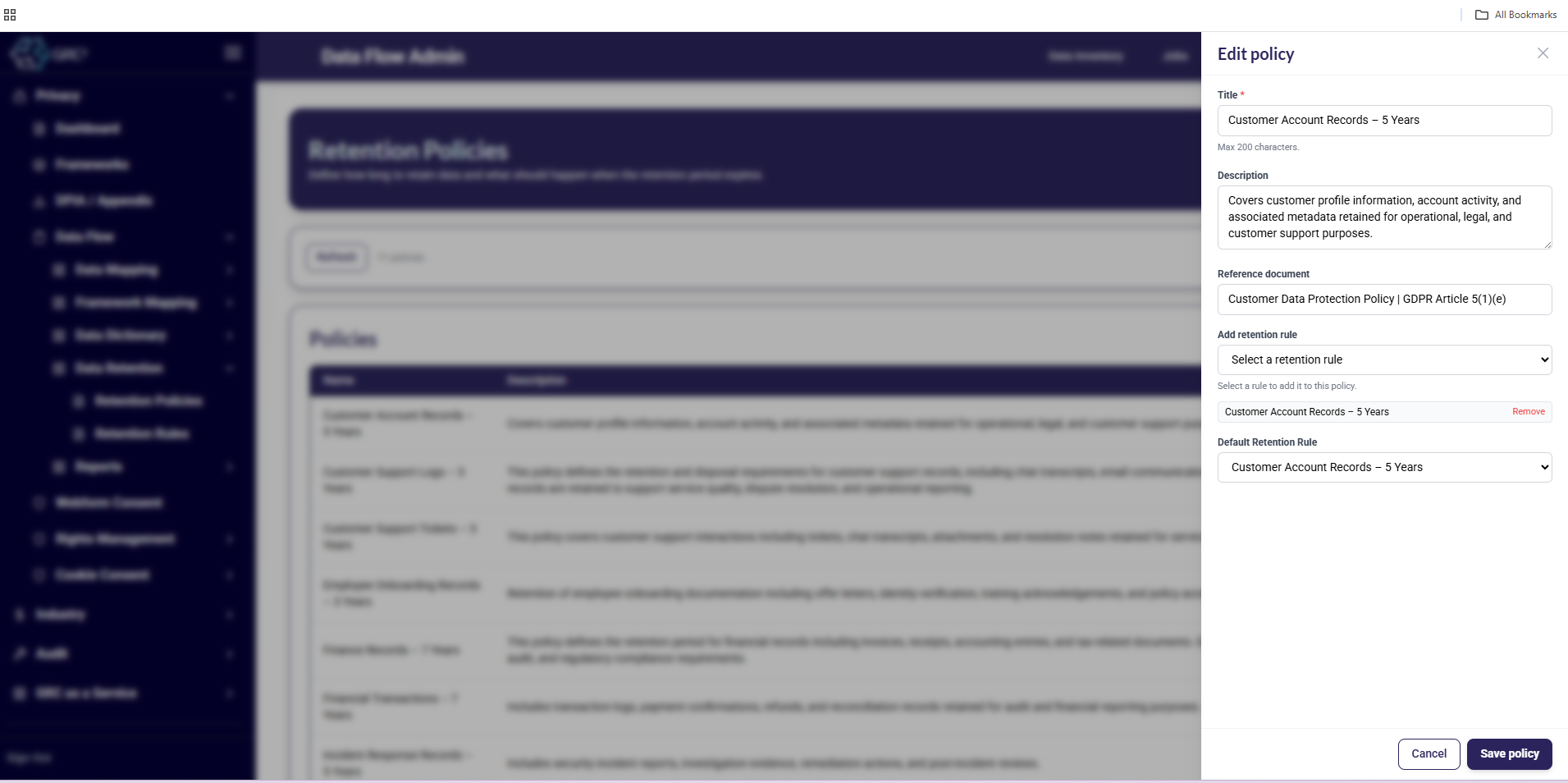
Empower teams to enforce retention and deletion in line with DPDP requirements
Define retention policies and timelines across systems, data types, and workflows
- ✓
Set retention periods by data category, purpose, and business need across your organization.
- ✓
Align retention to operational requirements while ensuring data is not kept longer than necessary.
- ✓
Assign owners and enforce policies consistently across teams and systems.

Automate deletion, archival, and minimization with verifiable outcomes
- ✓
Trigger policy-based actions when data reaches end of life and delete, archive, or anonymize automatically.
- ✓
Collect deletion confirmations and maintain evidence trails to support audits and internal reviews.
- ✓
Reduce manual coordination by automating workflows across internal systems and third-party tools.
Reduce risk by keeping only what you need and removing what you do not
- ✓
Minimize stored personal data to reduce breach impact and lower long-term compliance exposure.
- ✓
Enforce retention consistently across business apps, databases, storage, and third-party processors.
- ✓
Track execution and keep audit-ready proof of policy enforcement and deletion outcomes.
Clear, Consistent, Verifiable
Data Retention turns policy into practice by helping teams enforce timelines, reduce stored data, and maintain proof of compliant deletion.
Track what should be retained, what should be deleted, and when with workflow visibility that stays audit-ready without heavy manual effort.