DATA MAPPING

Understand, Track, and Govern Data Flows —
For DPDP Compliance

Visualize where personal data flows, how it is processed, and who can access it — with centralized governance and audit-ready visibility across systems.

Data mapping dashboard preview
Data flow view preview
OR

Empower teams to map and govern personal data flows in line with DPDP requirements

Map where personal data flows — across apps, teams, and third parties

✓
Visualize data movement across cloud, SaaS, on-prem, and hybrid environments
✓
Track processing steps, storage points, and where data is shared or transferred
✓
Identify access points, owners, and processors to reduce blind spots across workflows
Data mapping preview

Understand processing, sharing, and access — with clear data flow context

✓
Document processing activities and how personal data is used across features, teams, and systems
✓
Identify who can access data, where it is stored, and where it is shared with vendors or third parties
✓
Reduce risk by spotting unnecessary data movement, over-sharing, and high-risk transfers early
Data flow mapping

Turn data maps into action — policy, governance, and stronger controls

✓
Assign ownership for flows, systems, and processors to drive accountability across teams
✓
Apply governance controls for privacy, security, residency, and retention based on mapped flows
✓
Ensure teams ship faster by validating data movement and sharing before new features go live
Governance controls preview

Clear, Current, Actionable.

Data Mapping brings clarity to your processing landscape — so privacy, security, and product teams can align on how personal data moves.

Visualize flows, identify sharing points, and keep documentation audit-ready — without heavy manual effort or scattered spreadsheets.

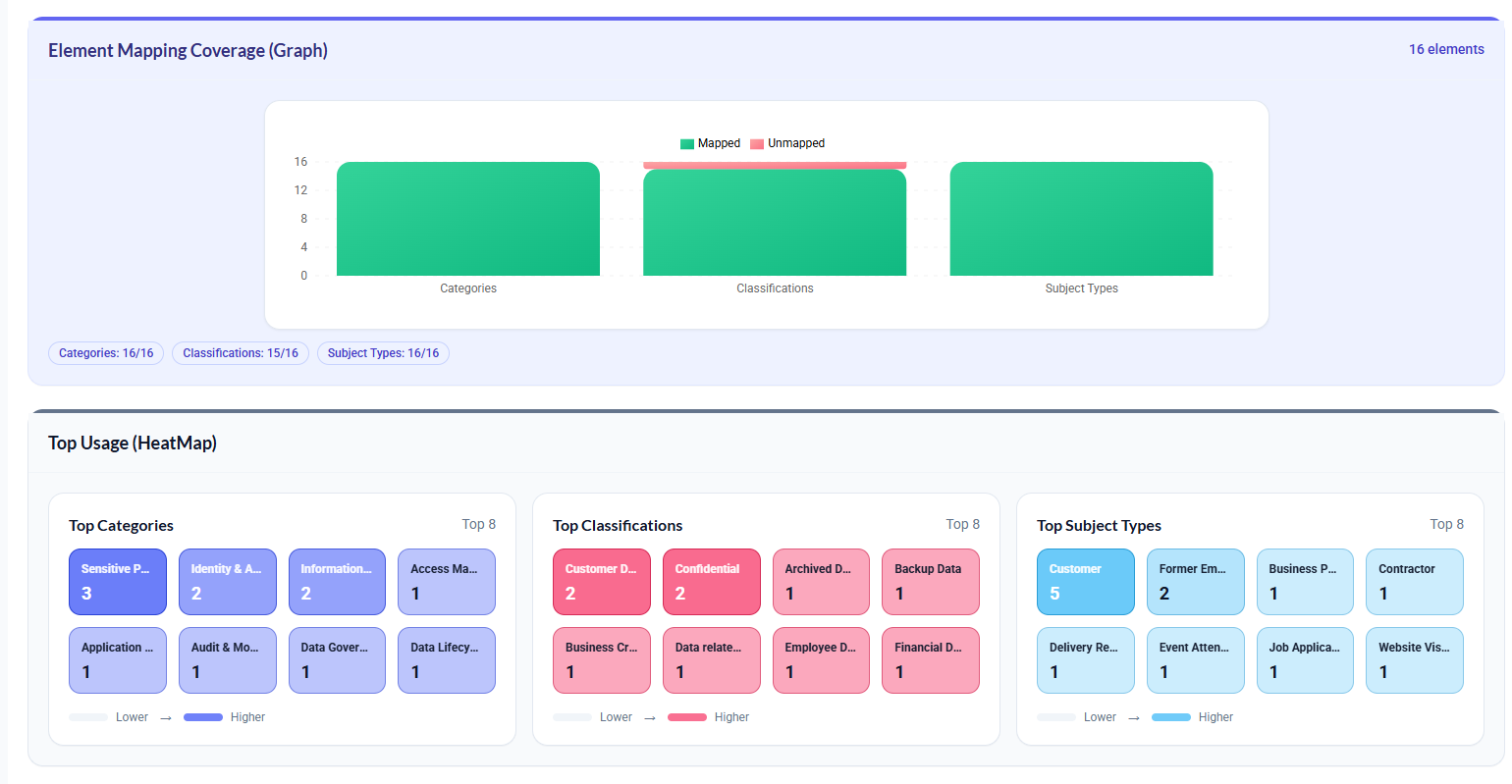
Data mapping dashboard

Frequently asked questions

Still have questions? Book demo with us.

Data mapping is the process of documenting how personal data moves across systems, applications, and third parties. It helps organizations understand sources, processing steps, access points, and destinations for DPDP compliance.
DPDP requires organizations to understand and govern how personal data is processed and shared. Data mapping provides visibility into data flows, helps reduce risk, and supports accountable, compliant processing.
A strong data map includes data sources, categories of personal data, processing activities, access roles, storage locations, sharing points, and third-party processors involved in the flow.
Data mapping supports compliance by enabling better governance of processing, helping teams validate lawful use, improving audit readiness, and making it easier to operationalize retention, minimization, and access controls.
Data discovery helps you find where personal data exists. Data mapping shows how that data moves, gets processed, and gets shared across systems and vendors.
No. Data flows change as tools, vendors, and systems evolve. Data mapping should be updated continuously to reflect your current processing landscape and reduce compliance blind spots.
Yes. By making data flows visible, teams can identify unnecessary sharing, over-collection, risky access paths, and uncontrolled third-party transfers — and then apply governance controls.
Product, engineering, security, and privacy teams use data maps to review new features, vendor integrations, data sharing, and processing changes — ensuring DPDP alignment before go-live.