

DPDP data breach notification is a mandatory compliance requirement when a personal data breach affects digital personal data handled by an organization. Businesses must identify the breach, contain the risk, notify affected Data Principals, intimate the Data Protection Board, and maintain proper evidence of response actions.
What Is DPDP Data Breach Notification?
DPDP data breach notification is the process of informing the Data Protection Board and affected Data Principals when a personal data breach occurs. A breach may involve unauthorized access, accidental disclosure, alteration, loss, destruction, or compromise of personal data.
Under the DPDP Act, organizations are expected to protect personal data through reasonable security safeguards. If a personal data breach still occurs, the Data Fiduciary must act quickly and follow the required intimation process.
A breach can happen due to cyberattacks, phishing, ransomware, weak access controls, employee mistakes, cloud misconfiguration, vendor failure, or accidental sharing of sensitive personal information.
For organizations working on DPDP compliance checklist, breach notification should be treated as a core privacy compliance activity, not only as an IT incident response task.
When Should a Data Breach Be Reported Under DPDP?
A data breach should be reported when personal data handled by an organization has been compromised in a way that affects confidentiality, integrity, or availability.
Organizations should not wait until the complete investigation is finished. Once the organization becomes aware of a personal data breach, it should begin internal assessment, containment, affected-user identification, and notification preparation.
Common breach reporting triggers include:
- Unauthorized access to customer, employee, or vendor personal data
- Accidental exposure of personal data through email, portal, or cloud storage
- Ransomware or malware affecting systems that store personal data
- Data shared with the wrong recipient or third party
- Loss of access to systems containing personal data
- Vendor or processor incidents involving personal data
A strong DPDP data inventory and mapping process helps organizations quickly identify what data was affected, where it was stored, who had access, and which Data Principals may need to be notified.
What Is the DPDP Data Breach Notification Workflow?
A clear workflow helps organizations respond faster and avoid confusion during a breach. The workflow should connect legal, compliance, security, IT, business, and vendor teams.
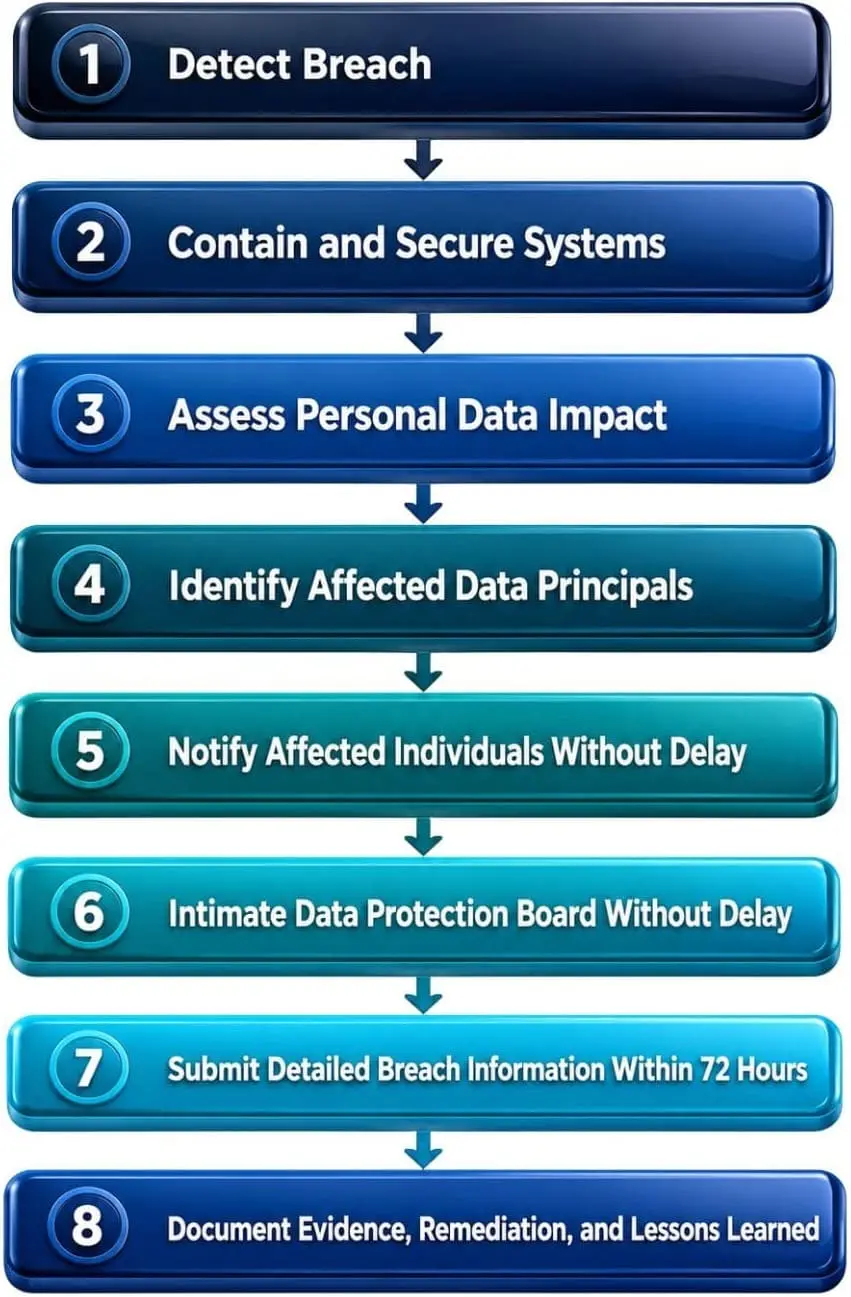
This workflow should be part of the organization’s incident response plan and privacy management process. It helps teams move from detection to notification, documentation, remediation, and audit readiness.
Read Also, Who is responsible for reporting?
What Information Should Be Included in a DPDP Breach Notification?
A DPDP breach notification should be clear, concise, and easy to understand. It should explain what happened, what personal data was affected, what actions were taken, and what affected individuals should do next.
A breach notification should include:
- Nature, extent, and timing of the breach
- Categories of personal data affected
- Likely consequences for affected individuals
- Measures implemented to reduce risk
- Safety steps Data Principals can take
- Business contact details for queries
- Remedial measures taken to prevent recurrence
Organizations should avoid vague communication. Instead of saying “some data may have been affected,” the notification should explain whether contact details, identity information, financial data, employee records, account details, or other categories of personal data were involved, wherever known.
Read Also, Vendor and processor breach point
What Is the DPDP Data Breach Notification Timeline?
The DPDP breach notification timeline is important because delayed reporting can increase compliance, legal, and reputational risk.
Affected Data Principals must be informed without delay in a clear and plain manner. The Data Protection Board must also be intimated without delay with a description of the breach, including its nature, extent, timing, location, and likely impact.
Detailed information must be submitted to the Board within 72 hours of becoming aware of the breach, unless the Board allows a longer period based on a written request.
To meet this timeline, organizations should prepare in advance with:
- Breach response templates
- Internal escalation matrix
- Data inventory records
- Vendor breach reporting clauses
- Incident severity classification
- Legal and compliance approval process
- Evidence and remediation tracking
Using privacy management software can help teams assign owners, track breach tasks, monitor deadlines, and maintain evidence for audits.
DPDP vs GDPR Data Breach Notification: What Is the Difference?
DPDP and GDPR both focus on timely breach notification, but their reporting triggers and risk approach are different.
| Point | DPDP | GDPR |
|---|---|---|
| Regulator notification | Data Protection Board must be intimated | Supervisory authority must be notified where required |
| Individual notification | Affected Data Principals must be informed without delay | Individuals must be informed when the breach is likely to create high risk |
| Timeline | Board intimation without delay and detailed update within 72 hours | Supervisory authority notification within 72 hours where required |
| Risk threshold | Focuses on personal data breach intimation obligations | Uses risk and high-risk thresholds |
| Documentation | Breach facts, impact, mitigation, recurrence prevention, and individual notification records should be maintained | Breach records and reasons for delayed notification should be maintained |
Organizations operating across regions should not create separate breach processes for each law. A unified breach response framework can support DPDP, GDPR, vendor contracts, cybersecurity standards, and internal compliance requirements.
Read Also, DPDP Compliance for Startups
What Are the Penalties for Not Reporting a DPDP Data Breach?
Failure to notify a personal data breach under DPDP can lead to serious regulatory exposure. If an organization does not notify the Board or affected Data Principals as required, it may face penalties, scrutiny, and loss of trust.
Penalty risk may increase when:
- The organization delays notification without valid justification
- Affected individuals are not informed clearly
- The Board receives incomplete or inaccurate information
- Breach records are missing or poorly maintained
- The breach occurred due to weak security safeguards
- Vendor-related incidents are ignored or reported late
Organizations should connect breach response with DPDP penalties risk management. Proper records, investigation notes, approvals, screenshots, logs, and remediation evidence can help demonstrate accountability.
How Can Organizations Prepare for DPDP Breach Notification?
Breach readiness should begin before an incident occurs. Organizations should build a repeatable response process so teams can act quickly during a real breach.
Best practices include:
- Maintain an updated personal data inventory
- Define breach severity levels and escalation rules
- Keep breach notification templates ready
- Train employees to report suspicious incidents quickly
- Add breach reporting obligations in vendor contracts
- Test incident response through mock drills
- Track breach evidence, actions, and approvals
- Review access controls, encryption, logs, and backups regularly
Organizations should also connect breach notification with DPDP consent management requirements, data retention, vendor risk, grievance handling, and security safeguards. This creates a stronger privacy compliance program.
How Can GRC³ Help With DPDP Breach Notification?
GRC³ helps organizations manage DPDP compliance workflows in one place. Instead of relying on scattered emails, spreadsheets, and manual follow-ups, teams can use structured workflows to manage privacy operations.
With GRC³, organizations can support:
- Data inventory and mapping
- Breach and incident tracking
- Evidence management
- Task ownership and deadlines
- Compliance reporting
- Vendor breach workflows
- Privacy documentation
- Audit readiness
This helps teams respond faster, maintain accountability, and improve DPDP compliance maturity.
Read Also, DPDP data retention and deletion
Conclusion
DPDP data breach notification is not just a legal formality. It is a structured response process that helps organizations protect individuals, reduce harm, and demonstrate accountability.
A strong breach notification process should include early detection, quick containment, clear communication, timely Board intimation, detailed reporting, and proper documentation. Organizations that prepare in advance with breach workflows, data inventory, vendor controls, and privacy management systems will be better positioned to meet DPDP requirements and reduce compliance risk.
If you would like guidance on strengthening your DPDP compliance framework or understanding how governance, risk, and compliance tools can support your organization, feel free to contact us for assistance.
You can also visit our website to explore how modern GRC platforms help organizations manage data protection, risk management, and regulatory compliance in a more structured and scalable way.
FAQs
Yes. If a personal data breach occurs, the Data Fiduciary must notify affected Data Principals and intimate the Data Protection Board as required under DPDP.