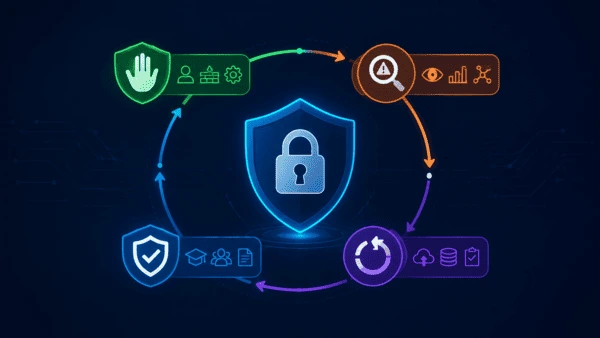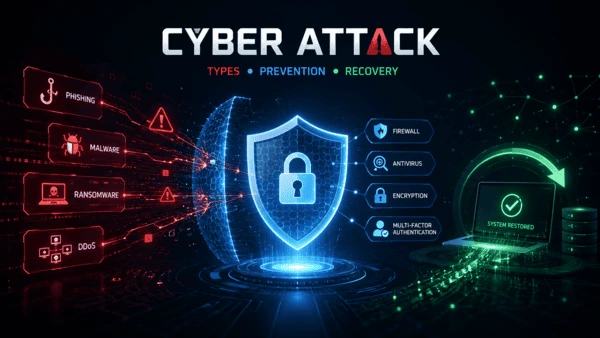

Cyberattacks can be prevented by implementing multi-factor authentication (MFA), patching vulnerabilities, securing networks, and training employees. A layered cybersecurity strategy combining Zero Trust, endpoint protection, and continuous monitoring significantly reduces the risk of attacks.
Introduction
Cyberattacks are no longer rare events—they are a constant risk for businesses of all sizes. Most successful attacks do not happen because attackers are highly advanced, but because organizations leave basic security gaps unaddressed.
To prevent cyberattacks effectively, businesses must adopt a structured, multi-layered approach that reduces vulnerabilities and limits attacker access at every stage.
What Is a Cyberattack?
A cyberattack is an attempt by malicious actors to gain unauthorized access to systems, networks, or data. These attacks are typically carried out to steal sensitive information, disrupt operations, or demand ransom payments.
Read also: How to Build a Manageable Vulnerability Management Program Part III
Types of Cyberattacks Businesses Face
- Phishing attacks – tricking users into revealing credentials
- Ransomware – encrypting data and demanding payment
- Malware – malicious software that damages systems
- DDoS attacks – overwhelming systems to cause downtime
- Insider threats – risks from employees or internal access
- Credential attacks – exploiting weak or reused passwords
Read also: Breach Management Guide Part II
Why Cyberattacks Happen?
Most cyber incidents occur due to preventable issues:
- Weak or reused passwords
- Lack of multi-factor authentication (MFA)
- Unpatched software vulnerabilities
- Misconfigured cloud or network systems
- Lack of employee awareness
Read also: IoT Device Security Risks Explained
Why Cyberattack Prevention Is Critical for Businesses?
Failing to prevent cyberattacks can result in:
- Financial losses due to ransomware or fraud
- Data breaches and regulatory penalties
- Operational downtime and business disruption
- Reputational damage and loss of customer trust
A strong prevention strategy helps businesses reduce risks, maintain continuity, and avoid costly incidents.
Read More: How to Detect Cyberattacks
Top 10 Ways to Prevent Cyberattacks
- Enable multi-factor authentication (MFA) across all systems
- Use strong password policies and password managers
- Regularly patch and update software
- Deploy endpoint detection and response (EDR) tools
- Secure networks with firewalls and segmentation
- Implement email security and anti-phishing tools
- Backup data regularly and test recovery processes
- Apply least-privilege access controls
- Monitor systems continuously for suspicious activity
- Train employees on cybersecurity awareness
Read More: How to Recover from Cyberattacks
Cyberattack Prevention Framework (6-Step Model)
Step 1: Identify Critical Assets
- Sensitive data
- Core business systems
- Customer information
Step 2: Strengthen Identity and Access Security
- Enforce MFA
- Apply least-privilege access
- Monitor privileged users
Step 3: Fix Vulnerabilities
- Patch systems regularly
- Perform vulnerability scans
- Harden configurations
Step 4: Implement Security Controls
- Firewalls and segmentation
- Endpoint protection (EDR)
- Email security
Step 5: Enable Continuous Monitoring
- Log collection
- Threat detection alerts
- Security dashboards
Step 6: Train Employees
- Phishing simulations
- Secure data handling
- Awareness programs
Read More: How to Prevent, Detect, and Recover from Cyberattacks (2026 Guide)
Cybersecurity Checklist for Businesses
- MFA enabled across systems
- All critical systems patched
- Endpoint protection deployed
- Email filtering active
- Backups configured and tested
- Access controls implemented
- Employees trained regularly
Read also: Governing AI in Cybersecurity
Why Employee Training Is Critical to Prevent Cyberattacks?
Employees are often the first target in cyberattacks. Without proper training, even strong technical controls can fail.
Businesses should focus on:
- Phishing awareness training
- Recognizing suspicious links and emails
- Secure password practices
- Reporting security incidents quickly
Read also: CMMC Introduction – Everything You Need to Know About DoD CMMC
Key Security Controls Every Organization Must Implement
- Multi-factor authentication (MFA)
- Endpoint detection and response (EDR)
- Network security controls
- Backup and disaster recovery systems
- Identity and access management
Read also: Prevention, Detection, and Recovery from Cyberattacks Part I
Common Mistakes That Lead to Cyberattacks
- Ignoring software updates
- Using weak or reused passwords
- Lack of employee training
- Misconfigured systems
- Excessive user access privileges
Read also: Key Risk Indicator and KPI in Cybersecurity Part I
30-60-90 Day Cyberattack Prevention Roadmap
Days 1–30
- Identify critical assets
- Enable MFA
Days 31–60
- Patch vulnerabilities
- Deploy security tools
Days 61–90
- Train employees
- Test security controls
Key Metrics to Track
- MFA adoption rate
- Patch compliance percentage
- Number of vulnerabilities
- Security incident frequency
Read also: How to Protect Against Malware Part IV
Conclusion
Preventing cyberattacks requires a proactive and structured approach. Businesses that invest in identity security, vulnerability management, and employee awareness can significantly reduce their attack surface and improve overall cybersecurity resilience.
In an increasingly digital environment, prevention is not optional—it is essential for protecting business operations, customer data, and long-term growth.
If you would like guidance on strengthening your DPDP compliance framework or understanding how governance, risk, and compliance tools can support your organization, feel free to contact us for assistance.
You can also visit our website to explore how modern GRC platforms help organizations manage data protection, risk management, and regulatory compliance in a more structured and scalable way.
FAQs
The best way is to use a layered security approach that includes MFA, regular patching, monitoring, and employee training.
Related Posts